Across our work with the axiology of Robert S. Hartman, and especially within the interpretative insights provided by his assessment instrument, we have talked about the vital importance of Self-awareness, both knowing/experiencing the Self on the highest levels possible and also being able to fulfill the highest potential of our existence. This degree and intensity of Self-awareness, in Hartman’s teaching, allows us to more fully appreciate the world we are a part of, our own Selves, and also to be able to contribute in the most impactful ways with the lives we are living.
Bringing interpretation to the assessment, we have always placed vital emphasis on the way the work-side scoring in Part 1 is either enhanced or diminished in its overall power by the self-side scoring in Part 2. We have explained that the self-side is the “pedestal” that the work side sits on. Unfortunately, we find many, many people who are strong on the work side and yet notably compromised and made vulnerable by a weak self-side.
More specifically, a person who is “Dominant Systemic” on the self-side—the Systemic score is the strongest—will have less Self-awareness. This does not make the person a “bad person,” but it certainly reveals a highly important area for growth. Unfortunately, many young adults—and in growing numbers—score in this range. The major culprit at the root cause of low Self-awareness is probably factors such as social media, even COVID, which tends to separate people from real-life contacts where who we are gets defined and worked out through engagements with others. Low, systemic Self-awareness is usually not caused by a person, or desired by a person, but the result of the impact of cultural dynamics that are very subtle and nuanced.
A person who is “Dominant Extrinsic” on the self-side will be highly role-defined, and see Self primarily in terms of the work being done, the roles played in family and community, and the responsibilities associated with all of these engagements. This “Self-identity” is often advanced and imbedded by the ways that others see us and the way that societal acceptance and reward frame the way we integrate into the communities we are part of. Most people in our databases that we have compiled over four decades are “Dominant Extrinsic” by a wide margin compared to the other, two possibilities.
The ideal on the self-side is to be “Dominant Intrinsic.” Here, the individual sees Self beyond the abstractions of the Systemic and beyond the factors and forces of role-identity. In some ways, the movement from “Dominant Extrinsic” to “Dominant Intrinsic” is the move from seeing one’s own Self in terms of a “profession” to seeing one’s own Self as a unique and singular “person”/individual. It is on this level that highest Self-awareness is achieved, and the stronger our Self-awareness, the stronger our awareness of any other dynamics of our existence from the beauty of nature to the uniqueness of others.
These distinctions are at the heart and core of Hartman’s axiology. We can see this clearly in his autobiographic writings found in Freedom to Live. These matters are so vitally important, that it might be very helpful to let Hartman speak for himself:
The more I am aware of my Self, the more, and the more clearly, I define and fulfill my Self, the more I am a morally good person, a good “I.”
Robert S. Hartman
It is interesting that Hartman underlines this statement, an odd characteristic of his writing that does not show up very much. He also identifies this level of Self-awareness with the profoundly important, philosophical word authenticity, and he firmly believes that this kind of authenticity leads to “being sincere, honest, genuine, true, and having Self-respect and integrity.”
Hartman then has a kind of warning: “To be your Self seems to be a simple thing, but it is most difficult to achieve. The catch is that it’s not so easy for you to know who you are, and even more difficult, once you know, to fulfill this knowledge in your living.” He is pretty clear that most people “sell out” to the demands and rewards of extrinsic culture with its collection of transactional rewards and punishments; acceptance and rejection can be powerful catalysts that influence the way we live. Hartman’s more succinct phrasing is uncompromising: “Some people know everything, but are aware of nothing.” This “nothing” would most certainly include heightened Self-awareness.
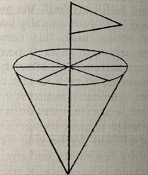
Hartman identifies the Systemic Self as the “thinking Self,” the Extrinsic Self as the “social Self,” and the Intrinsic Self as the “inner, moral Self.” He is not defining “morality” here as a specific set of values that would be almost always limited by a particular culture or community, but as a way of valuing that gives greatest attention to the recognition, respect, and enhancement of the lives of others and—in turn—one’s own life. He then constructed one of his most famous teaching icons, an inverted cone with a flag on top:
The flag at the top, smaller in size than any other element in the icon, represents the Systemic/Thinking Self, far removed in its emphasis from Descartes’ “I think, therefore I am” defining Self in terms of the priority of rational ability. The circular, flat grid at the top of the cone represents the Extrinsic/Social Self with all of its lines pointing out to the landscape of our transactional engagements in the world. The inverted cone, the largest part of the icon, is constructed in a way that indicates both “depth” and something of what the philosophers called the “ground” of our existence. Here, we find the Intrinsic/Moral Self that is capable of evaluating and engaging with the world and its people from the perspective of the acknowledgement of and acceptance of uniqueness, the intrinsic that Hartman’s believed was alive in all of the creation and in most people. Without a doubt, all three dimensions are parts of who we are. Hartman even uses the word personality, but he uses it in a very different way than most psychological interpretations and certainly in a different way than most “personality” assessments. For him, “personality” is the “total value pattern” that defines our engagement with life, how we frame and evaluate the world, others, and our own Self. And, this “Self-scape” is always changing, maturing and evolving in positive ways we hope, but also capable of de-volving and diminishing.
The dimension of intrinsic Self-awareness is the goal/the fulfillment of human potential. Hartman is quick to say: “Here is where the person with meaning is separated from the person without meaning. . . .For if we cannot define and become aware of ourselves, we are lost. If we can become aware of ‘I’—develop the concept of our Self—and if we can BE that Self which we have defined, then we become a morally good “I.”
I love the analogy that Hartman often used to explain the priority of intrinsic Self-awareness, the fulfillment of all that we can be. He envisioned a chess board where two masters are engaged in playing the game. Suddenly, a huge gust of wind blows all of the chess pieces, standing where they were in the masterful progress of the game, onto the floor. There are plenty of times, Hartman reasoned, when the “game” can be turned upside-down, even when it is being played with intellectual brilliance. But, he says, nothing has been lost physically (extrinsically) or lost mentally (systemically)—the pieces, board, and player expertise is still totally intact. What has been lost is the meaning (intrinsically) of that moment of engagement. Herein is the dramatic challenge of life—to have the important and useful dynamics of existence that are “physical” and “mental,” but not to lose that which is “meaning-full,” of highest value. The pathway to achieving and maintaining the “meaning-full” is the pathway to intrinsic Self-awareness.
It is, of course, obviously the case that the Judgment Index assessment has been used extensively and effectively for hiring, selection, and promotion insights. However, it should not be overlooked that a major emphasis for our use of the tool is development, and we are intent on being helpful with development on all levels of an organization. A great deal of our time is spent in leadership development, making sure that individuals are ready for upper levels of influence and impact; making sure that succession planning is augmented in the most important ways.
Our paradigm for developmental improvement has four critical elements which can be used individually or in coordination with each other. Our key point is that development is guided by analytical data compiled with the assessment over nearly 50 years. It is vital to us to be able to step beyond conceptual theories and anecdotal experiences. Here are our four steps:
1. Awareness—a powerful motivator for change. Once basic awareness is captured by the tool’s data, a person is more informed about areas where there is solid affirmation of strengths and areas where development is most needed. Studies about why people change rate awareness as the number one, most positive reason that people move in better directions and with higher motivation to do so. Simply, honest awareness can become a powerful catalyst.
2. Mentoring—using analytical data to put mentors with demonstrated strength alongside of mentees with growth and development needs. By using our data, mentoring is no longer a haphazard process with flimsy reasons for matches. Our data also demonstrates that an intentional and conscious mentor/mentee match can show 50% improvement in scoring areas of focus over a year’s time. The bonds that are established between people in the mentoring process will enhance all organizational communication.
3. Instruction—using more traditional teaching methods to address growth and development. In this instance, the instruction needed is guided by data. We have a Learning Management System available for seven of the areas where historically help is needed the most. By post-testing with the assessment, we can show precisely the degree of growth accomplished.
4. Counseling—one-on-one contact for the most demanding and important positions. We have highly trained coaches/counsellors who have years of expertise using the assessment to guide the right kinds of conversations. With both attention and trustworthy confidentiality, we are able to explore areas for growth that internal, organizational sources may be inadequate to understand in the detail required for highest achievement. For any, highly-placed, high-demand position in an organization, such one-on-one counseling, this kind of outlet for conversation, is indispensable. The value of a trusted advisor is beyond question, and is only enhanced over time.
Right Awareness > > > Right Conversations > > > Right Actions
Has anyone ever told you that you remind them of someone?
As much as you may look or act like another person, even with nearly 8 billion people on this planet, no one else is exactly like you. But how is that possible? How can each of us be as unique as our fingerprint? And why is this important?
When you know who you are and why you do things the way you do, you can begin to make better decisions for yourself that will ultimately improve your happiness. But understanding who you are goes well beyond understanding your IQ or personality! There are a variety of assessments out there that will try to define you. The fact is, you aren’t just a set of letters, a color, or a number. You are unique! We have to dig deeper to find out what makes you tick and why you do things differently than those around you. So, we need to measure something different.
Judgment Index uses the Nobel Prize-nominated math, science, and logic of Axiology (the study of one’s values), developed by Robert S. Hartman, to measure a person’s VALUES because…
Your values are those things that motivate, guide, drive, and direct your everyday decisions.
Bill Wilson, CEO Judgment Index
Every single decision you make, from what to wear to where to live, you make using your unique values. Given that the average adult makes more than 35,000 decision every day, understanding your values becomes a super important, game-changing factor for success and happiness. If you would really like to understand yourself better or if you want to make better decisions and choices, you can start by taking a hard look at your values.
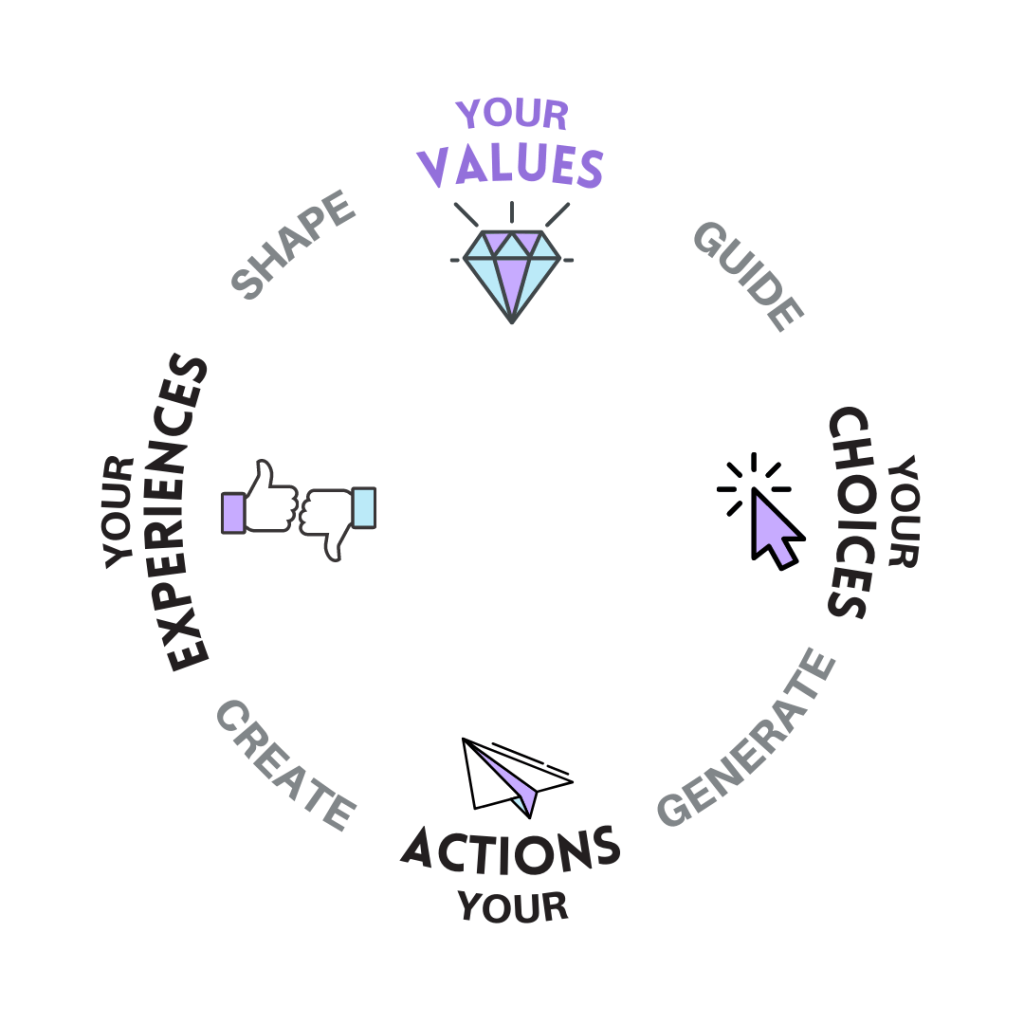
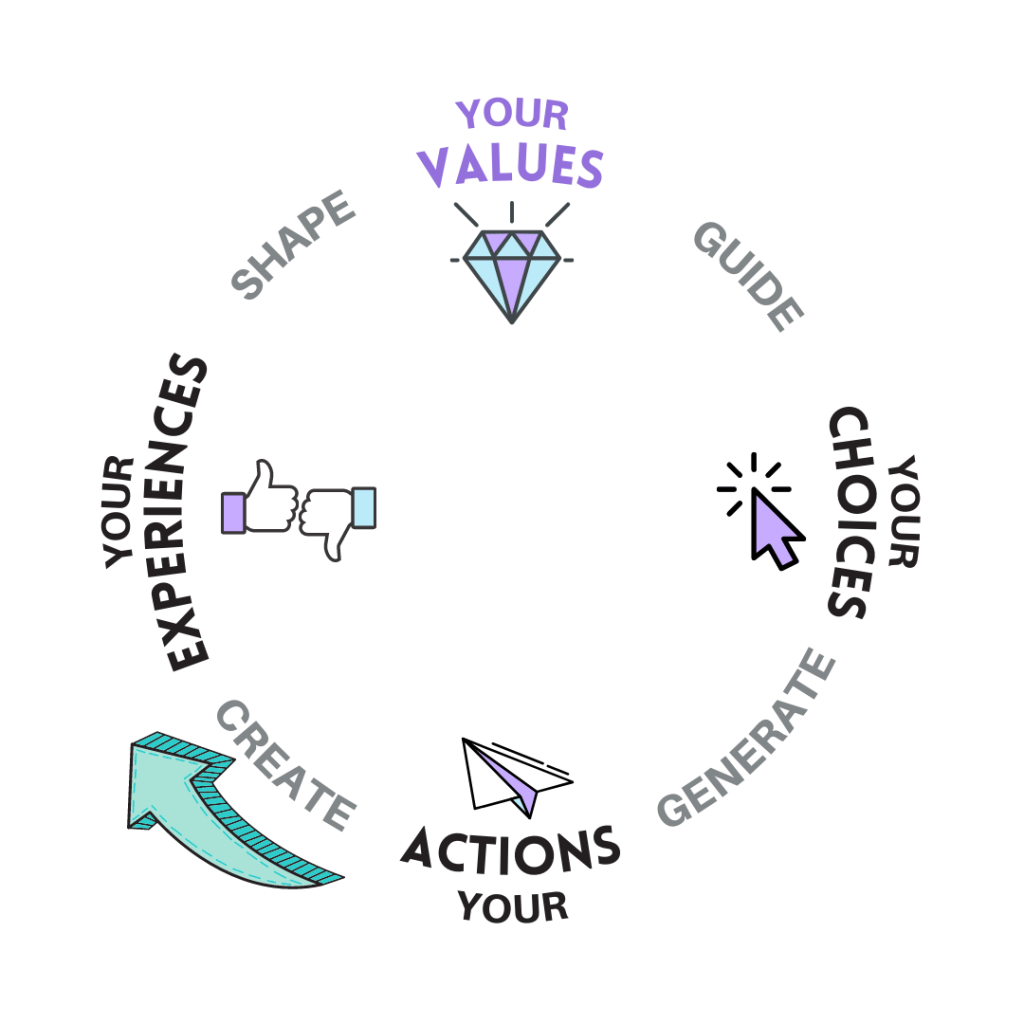
The Value Cycle is a visual we use to help you understand the role, importance, and impact of your values and how you can actually improve your life through positively affecting your Value Cycle.
Let’s take a closer look at the parts within the Value Cycle.
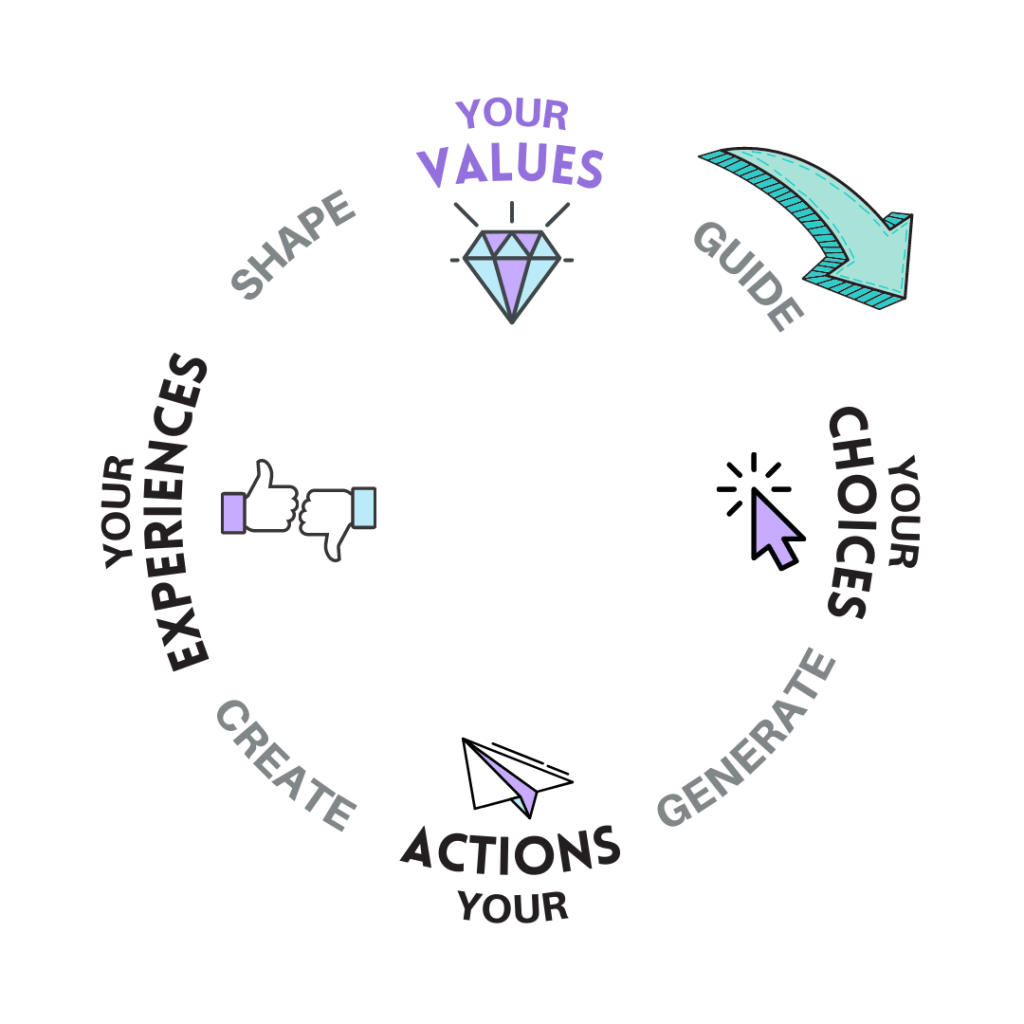
1. YOUR VALUES GUIDE YOUR CHOICES
Each of us has GIVEN values and CHOSEN values that guide our everyday choices.
Your GIVEN VALUES come out of experiences that you have had with circumstances not within your control. These are things like where you were born, the knowledge and wisdom imparted on you by your parents (or lack thereof), and the culture or religion in which you were raised. Take a moment and think back on your childhood to a situation that left such a lasting impression on you that the impact of that experience will affect you for the rest of your life. Whether good or bad, in those defining moments, your values were being developed and refined.
On the other side of the same coin, you have CHOSEN VALUES. Your chosen values are gained thru lessons and experiences that came about as a result of decisions you made for yourself like where you have chosen to live or where you work. For example, if you have made the choice to be a parent, you know that the values you had before having a child are different now that you are responsible for another humannlife. As we are constantly experiencing, learning, and growing, so are our Values.
It is with our given and chosen values that we filter our CHOICES. When you have the option between making a house payment or flying out to Las Vegas for the weekend, what are you going to choose? If you have a family that depends on you, and you want to make a healthy decision, you might opt to make that house payment. If you are single, feeling like living a little, and can afford to live more frivolously, maybe you hop on the next flight to the strip.
Let’s take a look at the next step in the cycle.
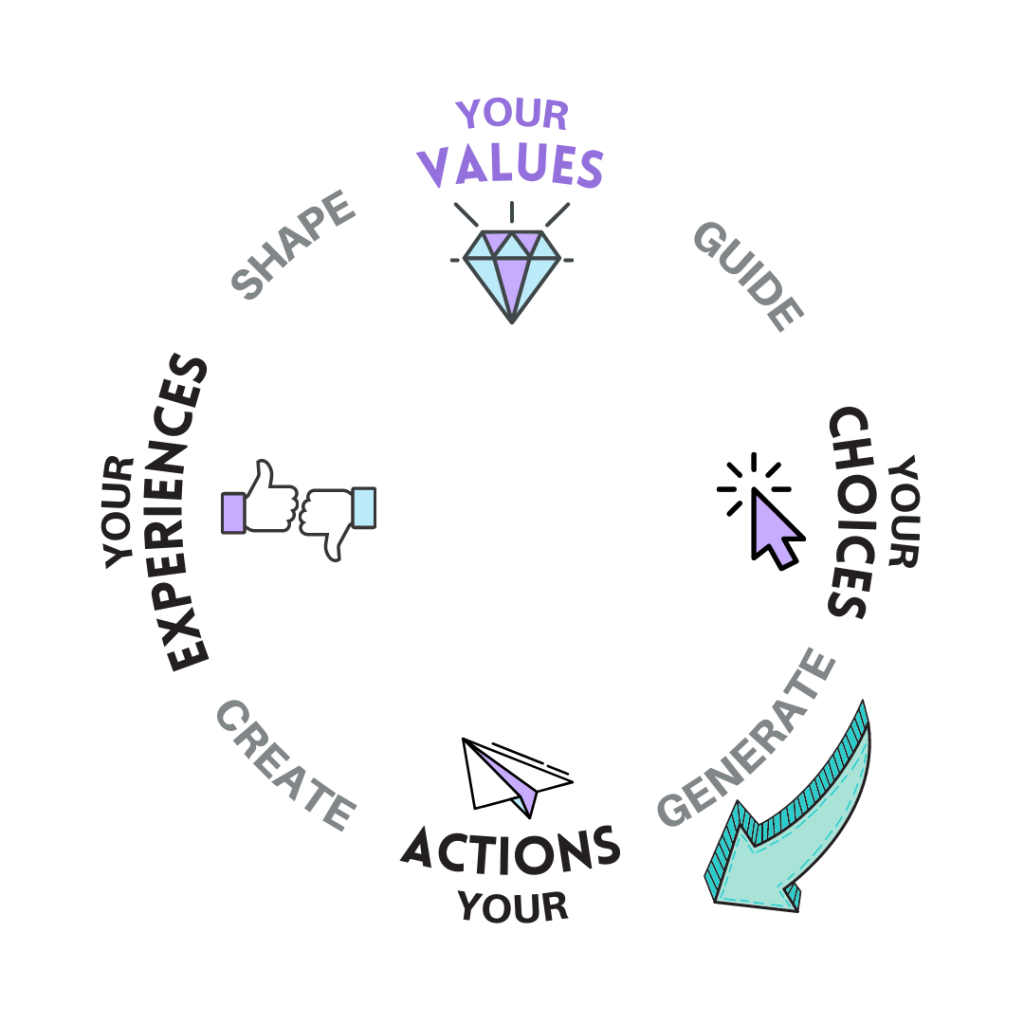
2. YOUR CHOICES GENERATE YOUR ACTIONS
The second part of The Value Cycle explains that each CHOICE you make, large or small, will generate an ACTION. Even your choice to sit on the couch and do absolutely nothing is an action… and sometimes, that’s an excellent choice!
To understand this a little better, we’ll use the following scenario to see The Value Cycle at work so far. Let’s say that based on your VALUES, you believe that marriage looks right for you. So, you make the CHOICE to propose to your partner. This choice generates an ACTION: a proposal. Will your partner say yes? Let’s find out.
3. YOUR ACTIONS CREATE YOUR EXPERIENCES
Rest assured, your ACTION of a proposal created an amazing EXPERIENCE for both you and your, now fiancé! You guys celebrated with all of your friends and family. A great time was had by all.
While this experience was positive for you and your group, not all experiences are equal. Sometimes we come into a set of circumstances that rocks our world, and we aren’t quite sure what to do next. Whether you are on the top of the world or down in the dumps, it is important to understand that these experiences alone do NOT define you. So, what does?
Here is where the magic of the Value Cycle comes into play.
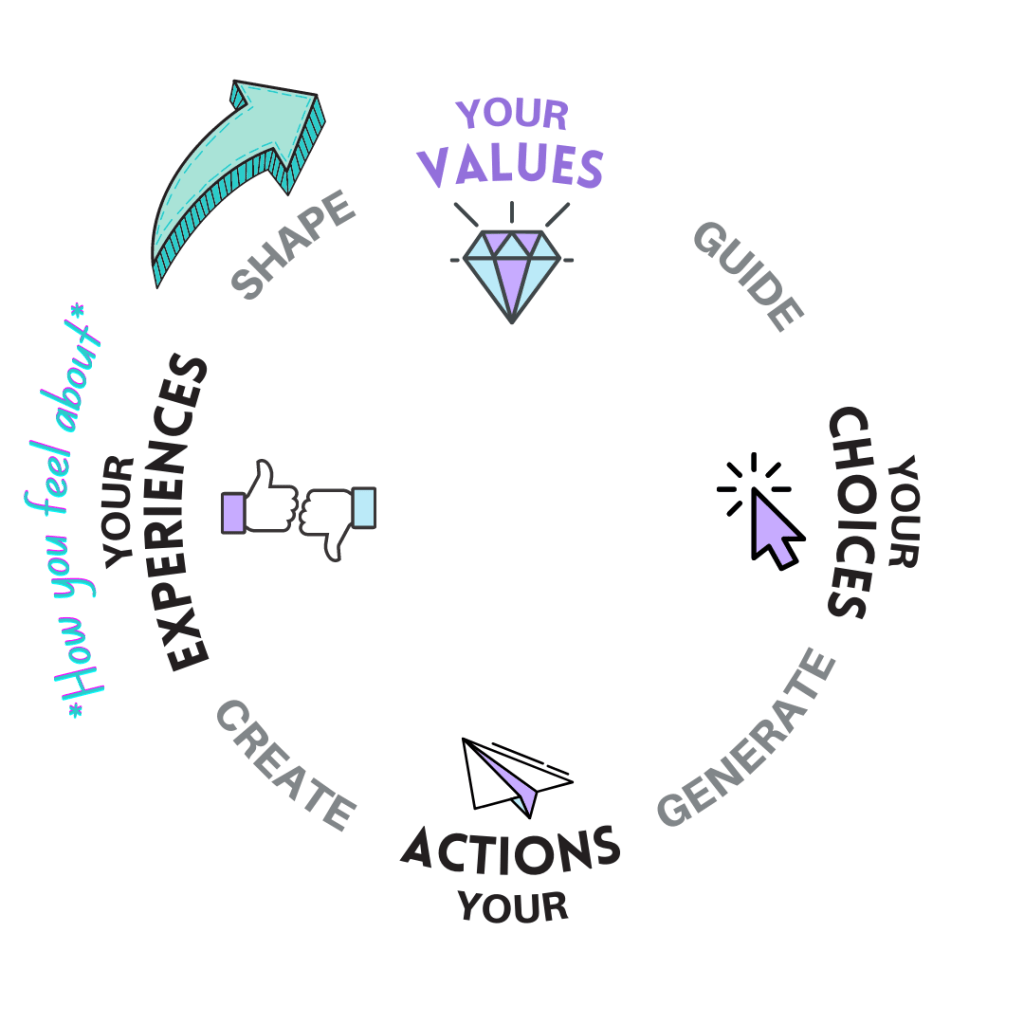
4. (How you FEEL about) YOUR EXPERIENCES SHAPE YOUR VALUES.
In this final leg of the cycle, we reveal that your life’s EXPERIENCES are what ultimately shape your VALUES, determining who you are, how you make decisions, and what makes you unique.
This is super important, so lean in and make sure you are paying attention...
An experience alone can’t shape your values. It doesn’t have that power. How you FEEL about your experience is what actually shapes your values. When you GET THIS, then you understand that shaping who you are becomes something you CAN CONTROL.
Viktor Frankl, a well-known author, philosopher, Holocaust survivor, and a contemporary of Robert Hartman’s, lived this concept. As someone who faced the hardest of times, he said:
Everything can be taken from a man but one thing: the last of human freedoms – to choose one’s attitude in any given set of circumstances, to choose one’s own way.
Viktor E. Frankl, Holocaust Survivor
While our circumstances are often out of our control, we can control one thing: how we feel about our situation. This means we get to choose our attitude, our perspective, and what we do with the information. You get to decide if you will use your good and bad experiences to spiral your Value Cycle upwards toward success and happiness or downwards.
Choosing a positive take on being dealt a really bad hand in life takes practice. Once you gain a little traction, on the other side is a much happier, more balanced, more fulfilled, stronger problem solving, better decision making, kinder, and more empathetic YOU.
With healthier values, you make better choices which generate better actions that create better experiences, positively shaping your values. And the cycle continues.
So where do you start?
Unlike your IQ and your personality, your values change and can be developed and improved over time. If you think back to the values you had when you were younger compared to now, hopefully you can see that your values are stronger and more well-rounded. To actively work toward a more fulfilled life, there are two places to impact your Value Cycle:
CHOICES: Start small. Pick one thing that you can do differently today that you know will positively impact your life and your Value Cycle. Maybe you don’t eat that donut. Maybe you call someone that would benefit with hearing your voice. Make a healthy choice. Then begin to string some of those together.
Great things are done by a series of small things brought together.
Vincent Van Gogh
ATTITUDE: Can you muster a positive attitude even when life throws you a curveball? This can be especially tough when you feel like you are doing everything right and making all the right choices…it doesn’t seem fair. With every experience in your life, you have the opportunity to let it build you up or tear you down.
You have power over your mind, not outside events. Realize this, and you will find strength.
Marcus Aurelius
The key takeaway…
There are things that are going to happen in your life that are out of your control. Fortunately, you have “say-so” in your happiness. With your next decision, picture The Value Cycle. Next, consider making a healthy decision – even if it’s hard. Finally, regardless of your choice and the outcome, seek out a positive attitude about and perspective of your experience. Even when it doesn’t seem possible, you have the opportunity, once choice at a time, to create happiness by making a positive impact on your values and The Value Cycle. This is life-changing kind of awesome.
Check out Judgment Index on social to learn more about values!
One of the most important “rites of passage” growing up in the 1950s and 1960s was not your first car or your first date. Very early on your hopes, dreams, and ambitions—all forms of valuing—were focused on bicycles. The bicycle was a source of great fun and great freedom. You knew every brand of bike available in your hometown stores, and the “coolest” kids in the neighborhood had shiny bikes that gleamed in the summer sun and could ride the bikes in ways that would make a circus performer jealous. Although most of us would have hand-me-downs from older siblings or bikes created from varied pieces of bikes picked up by our mechanical-gifted fathers, we studied the Sears-Roebuck catalog or peered in the windows of the local Western Auto Store to look at the newest, finest Western Flyers and Roadmasters. One boy from across town—the “rich section” of our community—even had a Schwinn Phantom with hand brakes; we looked on with awe and respect when he parked at the school bike rack.
In those days, at least at my house, you did not learn on a child’s bike at three or four. I don’t even remember ever seeing a child’s bike like my wife and I got very early on for our children. You learned on a 36” wheel bike that was your next oldest brother’s when he graduated to a car. At first, you could not even sit on the seat and peddle at the same time; your legs were not long enough. You did know every part, how it all worked, and how to mechanically ride. What you didn’t know about was balance—as it turned out, the most important aspect of riding successfully.
So, there was a several-day period—maybe even a week or more—of trial and error, mostly error. There were skinned knees, embarrassing falls in front of my peers, and I would even wait until the dark of late evening to try and try again; not a very good idea in our section of town where the streets were ill-lighted and filled with potholes. Knowing all you came to know about bikes, even how to quickly repair the tires that seemed to always be picking up a nail, was pretty easy. Being able to talk “bike language” made you seem like the “expert” that you certainly were not. None of this mattered all that much without balance.
And then, when balance came, it was an amazing, lived experience; an existential and intrinsic event well before you had even ever heard those words. The lived experience of balance gave me pure joy. The experience was what the philosopher, William of Ockham, way back in the early Middle Ages would have called a “felt reality,” an event never capable of being put exactly into words or explanations or definitions. Ockham talked about “an experience of first intension,” an “inner-tension” that made you and the bike become almost one. And, with balance, came a new sense of freedom which only got better—you learned intricate tricks that took mere skill to a next, exponential level, and you got paper routes that you did not have to walk with greater range and more customers. I can even recall riding my bike twenty miles to see the girl I had fallen in love with; no small accomplishment as there were plenty of high hills between where we lived. It must have been my biking that paid off as we have now been married for over fifty years. Balance can definitely have its rewards!
At this point, I can transition a bit. Before refocusing attention on balance, what I have said about biking to this point provides a really good opportunity to understand a basic level of insight about the work of Robert S. Hartman and then the assessment instrument he created. First, take note of how very early on I was “noticing” bicycles, even to the point that they were becoming a distinct object of what I called above my hopes, dreams, and ambitions. Seeing myself on a bicycle had become an important part of what Hartman saw as “Self-image,” how we see ourselves moving into the future, our “projected Self.” This “Self-image,” as he explained, translates into motivation, following our dreams and projections. We move from “present state”—unable to ride—to “desired state”—flying like the wind with skill and balance totally merged in a beautiful moment in time.
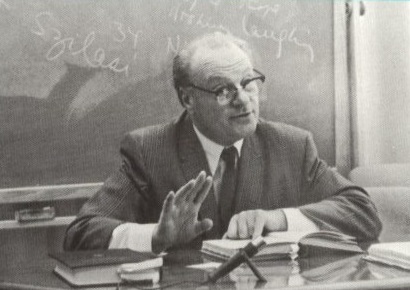
Dr. Robert Hartman is the creator of the Judgment Index assessment. He was a German philosopher who developed the formal axiological system, which provides a mathematical framework for analyzing and measuring values. Hartman’s work focused on the structure of values and the logic of value judgments.
Then, note that I emphasized above that this entire process is a values process. We come to establish certain goals, for example, that are valuable to us. We do a great deal of e-valu-ating as we refine these goals. Who we were as human be-ings1 at that time in our lives, much as it is the same today, was defined in terms of values and valuations, much more so than in terms of rational intelligence, psychology, or personality; we were—and are—values-driven, and the more you understand our value systems, the more you recognize what and who we really are. Hartman believed that this entire sense of a human be-ing as a values-driven and values-defined person was axiological, from the Greek axia means “worth” or “value.” All that I have said above totally adds up when you recall the sense of “Self-worth” that balance on that bicycle brought to your life.
So, Robert Hartman taught in his axiology and learned to bring measurement to his assessment instrument in three dimensions of evaluative experience:
The Systemic—when we conceptually know the general basics of some matter—our first, initial information about what a bicycle is, what it can do, what it is basically about as one object among others in the world
The Extrinsic—when we have real, recognizable information that allows us to discriminate and define in terms of a real-life object in the world—recognizing the difference in a Western Flyer, a Roadmaster, a Schwinn—recognizing different working features like brakes or balloon tires compared to the admired, narrow Schwinn tires—recognizing the difference between “girls’ bikes” and “boys’ bikes”
The Intrinsic—the experience of riding as fast as the wind, flying down steep hills, or amazing friends with daring tricks—the thrill of winning a school bike race—even the misery of coming in second in a race where your number one “rival” won the day on his Schwinn Phantom with the narrow, racing wheels.
Hartman gave me a perspective with this “Hierarchy of Value” that has changed the way I have looked at life, looked at other people, and even come to look at myself. I want to be efficient and effective in the useful Systemic and Extrinsic, but—even more—I want to experience the Intrinsic, the “felt” of life, the “in-tension” of life. Hartman put it all into words for me when I was about 20 years old, but it was all there with that first bicycle, but it never would have happened without balance. So, Hartman had no problem speaking to the importance of the strength of a person’s evaluative judgment, but he knew that strength without balance would always fall short and be inadequate to what was possible in life. In his assessment, he devotes huge amounts of emphasis to strength but saves his highest emphasis for balance. It is balance that allows strength to rise to its highest potential. It is balance that opens the door of highest achievement and worth of strength. It’s like riding a bicycle—when we get to balance, we are really going somewhere!
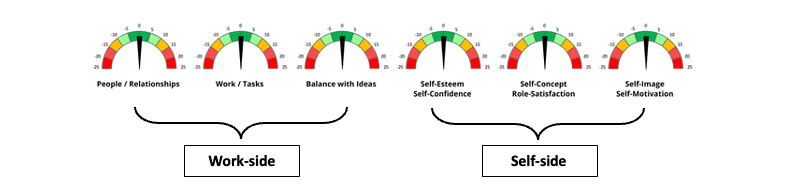
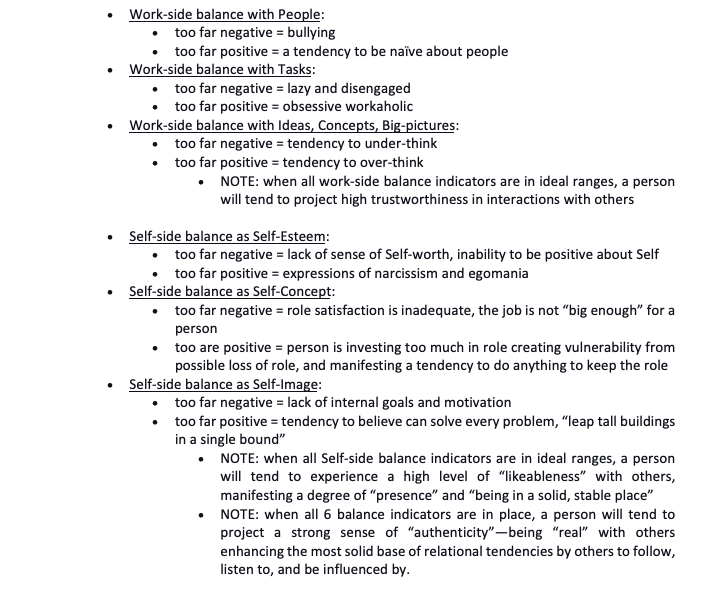
The way that balance is measured in the assessment is quite easy to understand. There are six areas given consideration, three on the work side of the assessment and three on the self-side. The potential range of scoring runs what Hartman calls a “transposition,” an undervaluing inadequacy of importance to a “composition,” an overvaluing exceeding of importance. The ideal is to hit a middle, balance range. The meanings attached to the scoring patterns are fairly simple to grasp as they are frequently evident in modern life circumstances.
These six areas of emphasis and the measures that go with them have never failed to help advance some of the most compelling and change-advancing conversations about development and growth, and particularly leadership development and growth, that I have ever experienced. The numbers related to balance in Hartman’s presentation can become a profound instance of awareness, and the kind of awareness that can be a real catalyst for positive change.
Now, what I would like to do in conclusion is to contextualize Hartman’s insights on balance within a larger context of human consideration that has been jumping to the front of “great ideas” and “great insights” that span the centuries of human enlightenment about what is actually most important in life. In creating this expanded context, Hartman’s work is not only greatly complimented and affirmed, but he can be seen—especially in the analytical data of his assessment—as advancing a very vital conversation in new and more exacting directions. Hartman’s work can be seen as part of a central focus of human consideration that has been peaking around the idea of balance for a very long time.
We can first touch base with Aristotle (384-322 BC) whose work touched almost any and every area of consideration about human life. But, at the core of his thought, Aristotle was concerned with how people lived their lives and the possibility of actually achieving happiness. He insisted on the importance of achieving equilibrium—his word for balance. This equilibrium was found somewhere in the midst of trying to walk the “Middle Way” (sometimes spoken of as the “Golden Mean”) in life. This middle path, and it was a lifelong journey, was crafting a way between extremes. His emphasis could take many forms:
the balance between excessive greed and depravity;
the balance between putting Self first in a purely selfish and self-serving manner, and being totally subservient to the needs of others;
the balance of body, mind, and spirit.
Aristotle also identified this kind of balanced life that would lead to happiness with “virtue” (the Greek arete) which he identified as the most important “balance” that could be achieved. At the same time, “virtue” meant the way that we ethically and morally lived towards others, but it also meant the fulfillment of one’s own “appropriate excellence,” what Hartman might call one’s own “uniqueness.” Here was a balanced approach with emphasis on being “true” to others in a respectful and care-filled way, but also being respectful of Self and fulfilling one’s own uniqueness in the context of high Self-understanding and high Self-awareness. Here we also see the intrinsic intertwining of Hartman’s mutually inclusive achievement of personal uniqueness and serving others. When this balance manifests in happiness, Aristotle called it the “activityofthe soul,” an experience of Self roughly equivalent to Hartman’s intrinsic value experience of Self-fulfillment.
Move to almost the other side of the world, even predating Aristotle by about 200 years, and you come to the philosophy of Lao-Tzu (in some more modern spellings, Laozi), a contemporary—at least in legend—of Confucius and Siddhartha, the Buddha. Lao-Tzu taught about the possibility of achieving a quality and beauty of living that allowed for the experience of “The Way”—in the ancient language of his way, the “Tao” which is often spelled today as Dao. This “Tao” is a way of life, a way of be-ing in the world, a state of be-ing in the world that has all of the earmarks of fulfillment and happiness. Unfortunately, in the race to power and dominance taken up by most people, this “Way”/”Tao”2 is missed. As with Aristotle and Hartman, the critical ingredient in and the ultimate confirmation of existence along this life’s-journey “Way” is balance.
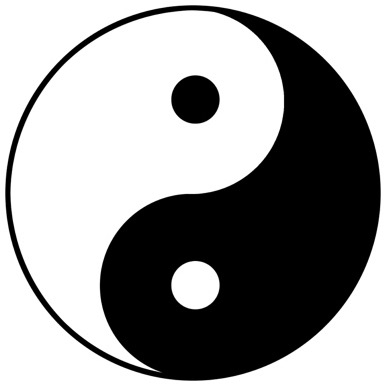
It is Taoism that provides the iconic Yin-Yang symbol that advances the idea that there is good and bad, right and wrong, light and dark and that the perpetual challenge of all of life is to keep some kind of constructive and functional balance between extremes. It is at the extremes, just as in Hartman’s balance indicators, that a compromising and even destructive “wobble” and “shaking” can occur that throws all of life out of sync. The Yin-Yang symbol also implies that there is light/good in the darkness somewhere if it can be sought out and discovered. There is also darkness even in the brightest light of goodness that can be threatening and must not be overlooked.
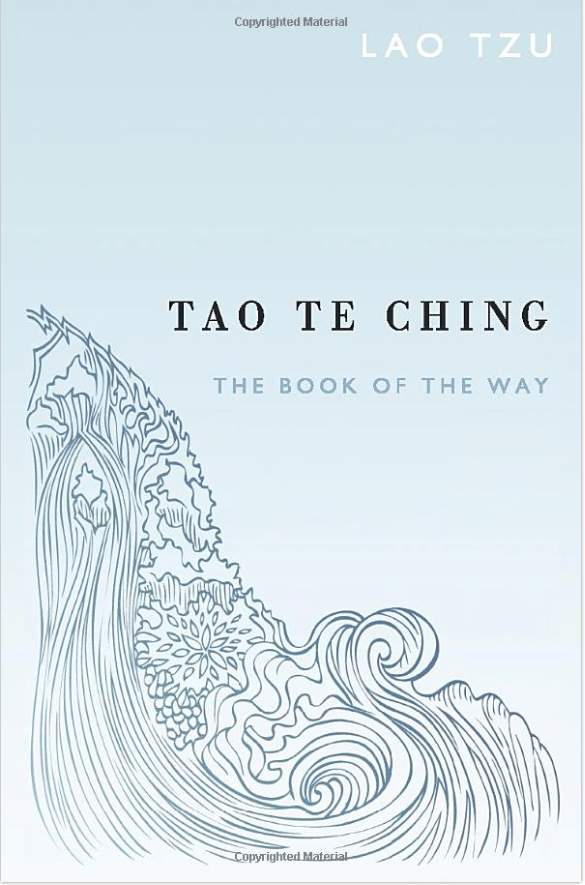
In the end, Lao-tzu had his fill of teachings, philosophies, belief systems, and religious and political establishments. He believed that most of these kinds of expressions and the activities that followed them were not advanced in order to achieve greater harmony and balance, but rather were all too often the medium and mechanism of personal gain and tribal power. All too often, out-of-balance greed on one side of life created great deprivation on the other side of life; humanity divided between “haves” and “have-nots” could never rise to the level of “civilization.” He left China to live a life of “creative withdrawal,” believing that such a life would bring greater happiness to himself and others so inclined to follow his “Way.” Only because a perceptive guard3 at the Great Wall—according to legend—recognized him and required writing down his thoughts before being allowed to leave do we have today the great Taoist text, the Tao Te Ching (also spelled as Daode Jing). A typical, standard translation reads The Classic of the Way and the Power. However, care must be taken here because the word translated as “power” carries all kinds of connotations of militaristic and political power that is aggressive, dominating, and malignant in its impact. To me, the most accurate and finest translation of the somewhat ambiguous, Chinese word leans in the close direction of Aristotle’s word virtue, arete. Without any question, Lao-tzu’s “Way” of living, the state of be-ing he aspires to as ideal, is a way of virtue that advances and sustains balance in living. To have this balance and advance it in society, then, clearly would be an unabashedly “powerful” Way of living.
To me, it has always been a wonderful teaching exercise to ask a student to take the Tao Te Ching, read it, and mark passages that were particularly meaningful or that “spoke” personally to the student. Without question, asking students to explain why particular passages stood out creates a very interesting conversation with others, but—more importantly—the kinds of “conversations” of Self-awareness that can occur within a person. My strong conclusion formed early on in my teaching career that this exercise was purely axiological since what the students underlined and highlighted ended up being reflections of their own value orientations. Here, then, are a few Taoist quotes that have risen from my own underlining:
The person who clings to his work will never create anything that lasts.
People who need to prove their point are not wise.
A good traveler has no fixed plans. He is not intent on arriving. So, he sees things along the way. His trip is not ruined by interruptions.
Presuming to know creates dis-ease.
The person who knows he has enough is rich.
Trying to rationally understand is like straining muddy water. Be still. Allow the water to settle.
The Tao that is named is not the ultimate absolute. The Tao has 10,000s of names. The nameless, the refusal to put into words, is the beginning of heaven and earth.
The clod of dirt beside the road knows more about the Way than most people.
Finally, there is one ancient stopping place of consideration that must be mentioned relating to this critical concept of balance. In the New Testament writings attributed to Paul (Saul of Tarsus), there is an emphasis on “the grace of God.” It is a typical Christian theme that almost always means “unmerited favor” that rises from the love of God which is extended to all people in the form of help, understanding, and forgiveness. Paul would certainly embrace these traditional ideas. However, in almost all of his writings, he turns regularly to the use of athletic metaphors of explanation. Grace for Paul, then, means a certain “gracefulness of living” in balance. His grace is an active way of living in the world, almost like the tight-rope walker or the gymnast on the balance beam. To live without falling, without losing balance, produces a highly desired style of life, a way of be-ing. There in this grace-full-ness was the possibility of achieving a form of happiness that transcends most happiness.4 This grace-full-ness is dependent on a way of virtuous living with others rather than any sort of theological construct or particularized church discipline or organization.
For the modern reader, if much of this discussion sounds to you like a major theme in the Star Wars saga, you are exactly right. The “Force” is the source of the energy that becomes the catalyst for all actions. Obviously, “Force” is an intrinsic word much like “Spirit” or “Energy.” This “Force” seems to animate every factor of life that may be cumulative over generations, and rises primarily from human decisions and the achievement of human potential. The word “Force” is simply a word, not all that different from the Tao in that the “Force” that is named, explained, and defined is probably not the “Force” at all but rather a reductionistic, rational concept. The “Force” is what the medieval philosopher, William of Ockham, as we saw in our initial statements, called a “felt reality.” It can be intrinsically experienced, but when it is put into words it is lost—and worse, becomes the possession of some cultural interpretation that people are usually called upon to unquestionably embrace and defend. The idea of a “felt reality” at the introduction and conclusion of this essay accentuates its importance; the highest realities of life are intrinsic, ineffable, and beautiful in ways that profoundly transcend rationality and mere “thinking.”
In the Star Wars saga, the “Force”—like most religious conceptions—has been sought, talked about, and articulated in metaphors and myths since the beginning of human consciousness. George Lucas, in conceiving the films, was certainly aware of Buddhist, Zen Buddhist, and Taoist concepts. For example, the Jedi uses forces of the “the light side”—who opposed the Sith—while on the contrary, “the dark side”—comes from the Japanese jidaigeki, the word associated with Samurai warrior movies. The seesawing of the “light side” and “dark side” becomes the fulcrum upon which the entire movie series turns.
The key point for our discussion comes from the expression “a disturbance in the Force” which appears at several important moments of crucial awareness in the films. Most prominently, introducing the critical theme in the first movie, the Sith-created Death Star with its forces commanded by the infamous Darth Vader succeeds in destroying the Rebel Alliance planet, Alderaan. Obi-wan Kenobi, the Jedi Master, suddenly slumps toward the ground, and gives one of the most memorable lines in the movie, “I felt a great disturbance in the Force as if millions of voices cried out in terror and were suddenly silenced. I fear something terrible has happened.” This “disturbance in the Force” is the awareness of a loss of balance, and when that balance is lost, forces of chaos are given space in which to work their actions of darkness and dominance. The goal of the Jedi is to restore balance, but as is seen in one character after another—but most particularly at first with the young Jedi, Luke Skywalker—there must be a finding, claiming, and sustaining of personal balance—the “Self-side”/the internal world side, to use Hartman’s words, bringing the foundation of its balance to the external world side. How telling in that famous scene where Luke steers his X-wing Fighter into the canyon walls of the Death Star that he puts his rational technology away and depends for a moment on his own balance.
References:
1For those familiar with my writings, I use the spelling be-ing with the hyphen to try to capture the verbal force of our living in the world. To me, the contrasting word being has too much of an object status which reduces the human to an object among other objects as opposed to an “actor” carrying out actions in the world. For those with more than a little dose of the history of philosophy, the distinction here is very close to what Martin Heidegger called Dasein, be-ing there, real present-tense existing in the moment/the world. This is also close to what Jean-Paul Sartre called pour-soi, be-ing for itself, primary consciousness and awareness of the experience of the present moment of one’s existence as an authentic/valued Self, and which Sartre contrasted with en-soi, being in itself, the existence of the Self as an object among other objects, defined/valued by the objective forces of nature and culture. Ultimately, Sartre wants to talk about the fact that we cannot avoid living in the world, and must always be contending with how we are seen/defined/valued and how we see/define/value our own Selves. Because there is always this vacillating, tenuous, ambiguous “connection” between world and Self, he ultimately sees existence—his “Way” so to speak—as be-ing in itself for itself.
2For those familiar with the New Testament, this emphasis on “Way” should rise to attention reminders of Jesus’ statement—in response to “Doubting” Thomas’ urgent question near the end of Jesus’ life about “showing us the way—that He (that is, His “way” of living/way of be-ing in the world) is the ultimate “way” to whatever may be seen as God, the Holy, Eternal Life, etc. It is also interesting that this “Jesus Way” has a close correlation with Aristotle’s emphases on virtue, be-ing one’s own Self, happiness, and balance.
3This story of how the book came to be written is interesting, but in reality, the book is a compilation with attribution to Lao-tzu that came into its final form over generations. This does not diminish the book in any way, and without a doubt some—perhaps many or most—section was written by the great master or written down by his followers. This process of compilation and attribution can likely be applied to almost all pieces of ancient writing.
4The normal Greek word for happiness is Eudaimonia which almost means “good luck” or “good fortune,” being especially fortunate in the way life turns out. However, there is also in the New Testament that influenced Paul the possibility of Makarios happiness, often translated as “blessedness,” a state of be-ing that is deeply experienced in balanced and virtuous living with others.
Have you ever been in a disagreement someone and no matter how hard you tried you just weren’t getting your point across? You finally had to just “agree to disagree”. It can be frustrating when you think you are clearly expressing yourself, and you can’t believe how someone doesn’t seem to be picking up what you are putting down. What you might not be considering is that they are probably thinking the exact same thing.
WHAT’S ACTUALLY HAPPENING
Without always being conscious of it, we tend to assume that our thoughts and attitudes are shared among the crowd we are in and are even a reflection of the larger population. This is such a widespread and common phenomenon that some people spend a lot of time researching and studying: “Why do we assume that other people think like we do?”
While it is speculated that our doing this could stem from a need to fuel our self-esteem or from a need to project our opinions onto others, at the heart of it remains the fact that we each approach a situation with our own, unique VALUES, and we are constantly putting those values onto others.
Your values have formed over the course of your entire life and are being refined by every new experience. No one else has had the same experiences you have had, therefore no one else is going to have the same values. When you assume that other people want what you want, like what you like, and think like you think, you are putting your values on them. This misconception will leave you and the other person frustrated and disappointed every time.
THE SOLUTION
Awareness. The amazing and magical thing about awareness is that it can work instantly to help solve a problem. Here is how awareness unfolds in this situation:
FIRST
You are able to see and acknowledge that other people come into an interaction with you from their own perspective with their own values.
SECOND
You then demonstrate compassion by allowing enough space in your conversation for the other person to express their viewpoint.
THIRD
This selfless act takes the personal attack out of the disagreement and can allow the parties involved to take a more objective approach toward finding a solution.
SOLUTION SUMMARY
When you go into any situation with another person assuming they are thinking the way you are with the same values, it feels very personal when they disagree with you. But when you open yourself up to allow for two different perspectives with two different sets of values, suddenly the frustration, friction, stress, and emotions subside. The group can move forward more objectively to find a solution.
TRY IT OUT
Next time you are speaking with someone, take a brief moment to be conscious that the two of you have different values. And this part is key; while you won’t always agree with the other person’s decision or point-of-view, that’s not the endgame here. Instead, the goal is to eliminate the personal attack and hurt feelings that come as a result of complete disregard for the other person’s values and perspective. Bonus, this will allow for better, more effective communication.
THE FINAL TAKEAWAY
In 1970, Elvis Presley released his version of Joe South’s “Walk a Mile in My Shoes”. This heartfelt song encourages us to actively consider what life looks and feels like from another’s perspective, not just our own.
If I could be you, if you could be me For just one hour If we could find a way To get inside each other’s mind
If you could see you through my eyes Instead of your ego I believe you’d be, I believe you’d be Surprised to see That you’ve been blind
Walk a mile in my shoes Just walk a mile in my shoes And before you abuse, criticize and accuse Just walk a mile in my shoes
What a powerful and excellent message. If we would all take the time to empathize with those around us, imagine how productive and peaceful our world would be.
Today, you can simply start this awareness journey by just noticing that the other person is wearing different shoes (and values) than you. This is something for all of us to learn and be reminded of because…
“I mean, seriously, how often do you really look at a man’s shoes?”
Have you ever experienced one of those special moments when you learn something new about yourself and a lightbulb flashes on?
For Judgment Index by Carla Yetter, Ideas Alive
These special moments of deeper understanding in your life are known as “Aha moments.”
It’s in these brief encounters with your self that you gain a little more insight into this world and your place in it. You’ve tapped into a little Self-Awareness.
And the closer you get to defining who you are and fulfilling that definition, the more Self-Aware and happier you will be.
This idea of wanting to find out life’s purpose and our individual place in this world is as instinctual as survival. The hardest thing you will have to do on your journey to Self-Discovery is filter all the external noise coming from anything or anyone that takes away from your Self-Concept, your Self-Esteem, and your Self-Awareness.
“You define your own life. Don’t let other people write your script.” -Oprah Winfrey
Watch our for these three inhibitors to Self-Awareness. You will be pushed, pulled, and persuaded to believe things about yourself that may conflict with or override your internal voice.
Inhibitor 1: Your Roles
Any position in which you carry a responsibility or commitment like being a parent, child, friend, volunteer, student, or employee is a role. Many people proudly define themselves by their various roles.
But you can get so caught up in fulfilling any one of your roles, that you lose sight of who you are outside of it…to the point where you have a hard time remembering why you even chose that role in the first place.
You will start to move away from Self-Awareness when you give more energy toward your role than you have budgeted for. When this happens, there is less energy available for Self-Care. As a result, stress levels rise as your plate gets too full, and you actually become less efficient, less productive, and less happy both with yourself and with your role. At this point, you have moved from Self-Awareness to survival.
Inhibitor 2: People
In your life, you will cross paths with friends, family, teachers, preachers, mentors, bosses, coworkers, coaches, teammates, and on and on the list goes. The way in which you interact with your peers can shape your Self-Esteem and impact how you view your self.
When someone you trust offers an opinion or advice, you could be more inclined to make choices that you believe will meet their expectations, even when you are giving up some of yourself in the process. It is important that you temper the need to receive their input and approval with the need to be true to who you are.
Inhibitor 3: The Media
It’s everywhere, it’s all the time, and it’s relentless. Nearly 63% of the world’s population uses the internet, with a slightly larger portion having a television in their home. Over 80% of the people in the world use a smartphone. The access to technology makes it virtually impossible to get away from the non-stop influence of commercials, advertisements, news, and social media.
Even for those with a strong sense of Self-Awareness, there is truth to the idea that what you see is who you are. And on average, we expose ourselves to nearly 3 hours of social media every day. We fall in love with YouTubers and TikTokers. And regardless of how they are actually doing, we often mistake the amazing way things look for them on the outside as being a strong representation of how they are on the inside. So, we do our damndest to replicate and mimic what we see in the lives of those people that are in our phones, even to the extent in which we are willing to compromise our own personal values.
Out of the 117 billion people that have lived on this planet, you are not like ANY of them. So, who are you?
You are unique.
You are more than your job. You are not limited by what your friends, coworkers or family say that you are or should be. And you are certainly special in your own way, just as you are, regardless of the latest trend on Insta.
P!nk offers some encouragement to allow yourself to shine through:
“Throw your head back and spit in the wind. Let the walls crack, ’cause it lets the light in. Let ’em drag you through hell, They can’t tell you to change who you are. That’s all I know so far.”
You are always evolving, growing, and changing. You will constantly be learning more about yourself from the decisions you make and the interactions that you have. When you know who you are, everything changes. With this in mind, know that Self-Awareness isn’t something that you achieve or a box that you check off when you get there. Instead, Self-Awareness is an organic, living opportunity to better your life.
Working to be in tune with who you really are on the inside and trying to bring that together with how that manifests outside in the world is true Self-Awareness. Unfolding it is a lifelong journey that will bring you confidence, fulfillment, and happiness.
My name is Starr. I am married to Bill Wilson, one of the founding partners of The Judgment Index in Chattanooga, Tennessee. Talking about, writing about, and educating companies, teams, and individuals about how we can improve our lives through self-awareness is one of my favorite things to do.
Axiology is the philosophical and scientific study of one’s goodness, values, and worth. We use this science to increase a person’s self-awareness by measuring and reporting the individual’s unique values.
Your values are those things that motivate, guide, drive, and direct your everyday decisions.
Why do you do things the way you do? What makes you different than me? How can we make better decisions for ourselves to live happier, more fulfilled and successful lives?
All of these questions are answerable, and we love to talk about it!






 Axiology